

The gaming industry is constantly evolving, driven by new technologies and innovation. From 2D and 3D graphics to mods and patches, gaming has always embraced progress. For competitive players, tools like buy Rust cheats have emerged to enhance gameplay. Now, artificial intelligence (AI) is set to revolutionize the field.
AI is transforming how games are designed, developed, and played, enabling smarter non-playable characters (NPCs) and procedurally generated worlds that create immersive, dynamic experiences once thought impossible. The global AI in gaming market is expected to grow from $3.28 billion in 2024 to over $51 billion by 2033.
With more than half of game development companies now using generative AI, developers have fresh opportunities to enhance storytelling, gameplay, and player engagement.
Smarter NPCs: making games feel alive
Traditionally, NPCs followed scripted behaviors, such as patrolling fixed paths or repeating limited dialogue.
Today, AI-driven NPCs can learn, adapt, and evolve. Using machine learning and “behavior trees,” developers can create characters that respond intelligently to player strategies, simulate emotions, and even form relationships with other NPCs.
For example, Middle-earth: Shadow of Mordor introduced the Nemesis System, where enemies remember past encounters and adapt their behavior. More recent titles are pushing this further, allowing NPCs to evolve throughout the game for a more realistic and unpredictable experience.
However, some players prefer to gain an advantage by using cheats, such as those found at https://wh-satano.ru/en/cheats/rust.
Procedural worlds and dynamic storytelling
AI is also revolutionizing world-building. Once limited to random terrain, procedural generation now allows for the creation of entire ecosystems, cities, and quests that adapt to player actions. Developers can set high-level rules, and AI fills in the details, balancing aesthetics, difficulty, and pacing.
Storylines are also becoming more dynamic. AI-powered dialogue systems can generate responses based on player tone and choices, while procedural events can integrate side quests and character arcs into the main plot.
This results in games where no two experiences are alike, as the story evolves organically with the player.
The role of game engines
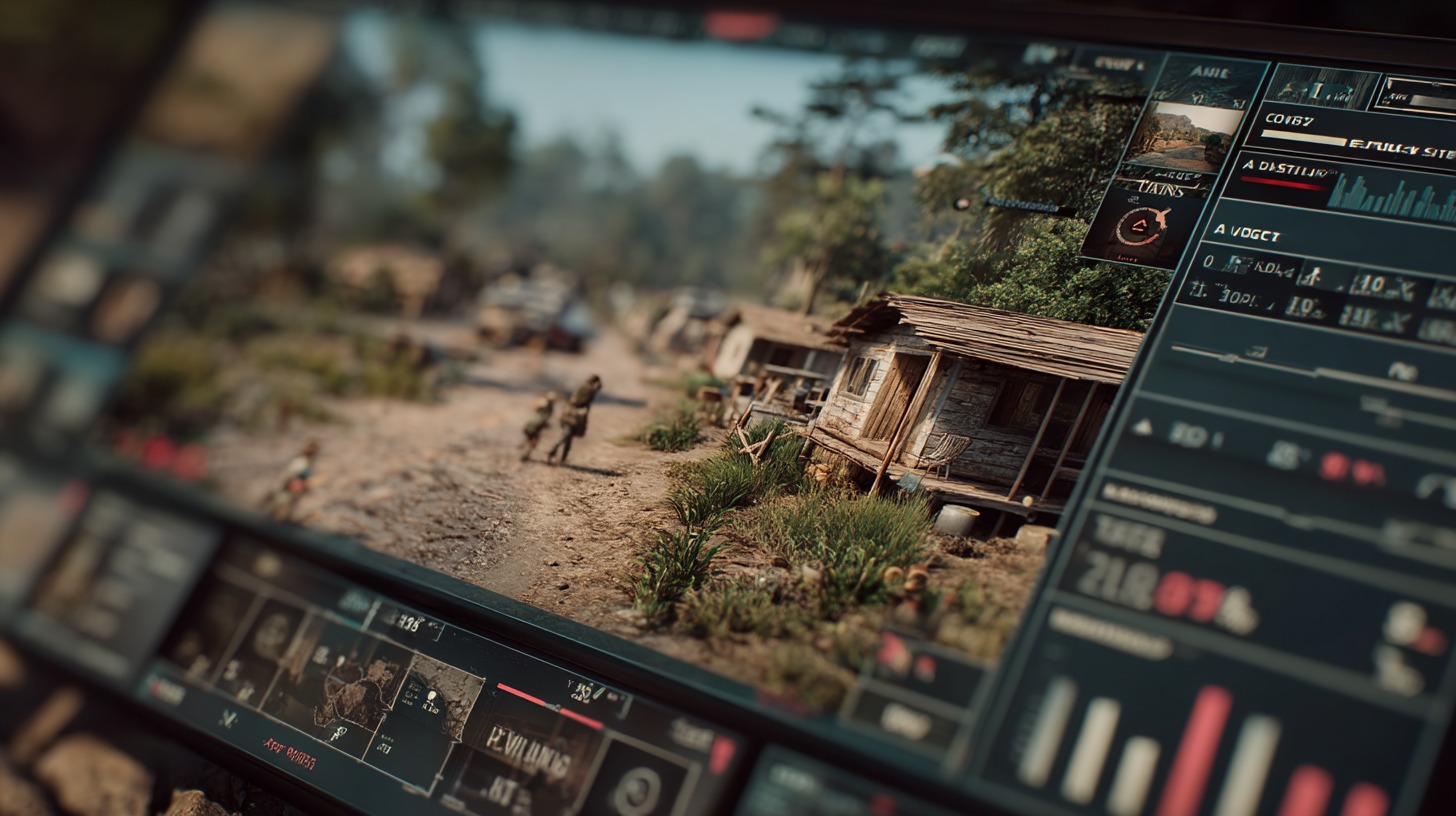
At the core of every modern video game is the game engine — the software framework that provides the tools developers need to build and run their creations. Game engines handle everything from graphics rendering and physics to audio, scripting, and AI.
Capcom’s proprietary RE Engine, used in titles like Resident Evil: Village and Monster Hunter: Rise, is a great example of AI integration.
It features advanced navigation AI and behavior trees that enable more realistic enemy behavior and dynamic environmental reactions. Other engines, like Unity and Unreal Engine, use similar tools to drive intelligent NPCs and adaptive gameplay, while frameworks like CryEngine complement high-fidelity visuals with AI-driven interactions.
Industry impact and statistics
AI adoption in game development is accelerating. According to the Game Developer Conference’s 2025 State of the Game Industry report, over 50% of development companies are using generative AI.
This technology helps studios reduce production time and costs while increasing creative output. AI is also used to simulate opponents and balance matches in esports, making them more immersive and accessible.
Breaking into AI game development
For aspiring developers, understanding AI and computer science is essential. AI game programmers create the algorithms that govern NPC behavior, procedural generation, and adaptive gameplay.
Skills in programming languages like C++ and Python, along with knowledge of neural networks, decision trees, and pathfinding algorithms, are highly valued. With the continued growth of the gaming industry, the demand for AI-savvy developers is only increasing.
Gaming and esports at capitol tech
Capitol Technology University’s programs in Artificial Intelligence and Computer Science equip students with the skills needed to succeed in game development.
Capitol Tech offers hands-on learning and research opportunities in our new CAILIE virtual AI lab and Esports arena. Our curriculum is grounded in real-world applications, preparing graduates to lead innovation in AI, gaming, and beyond.